
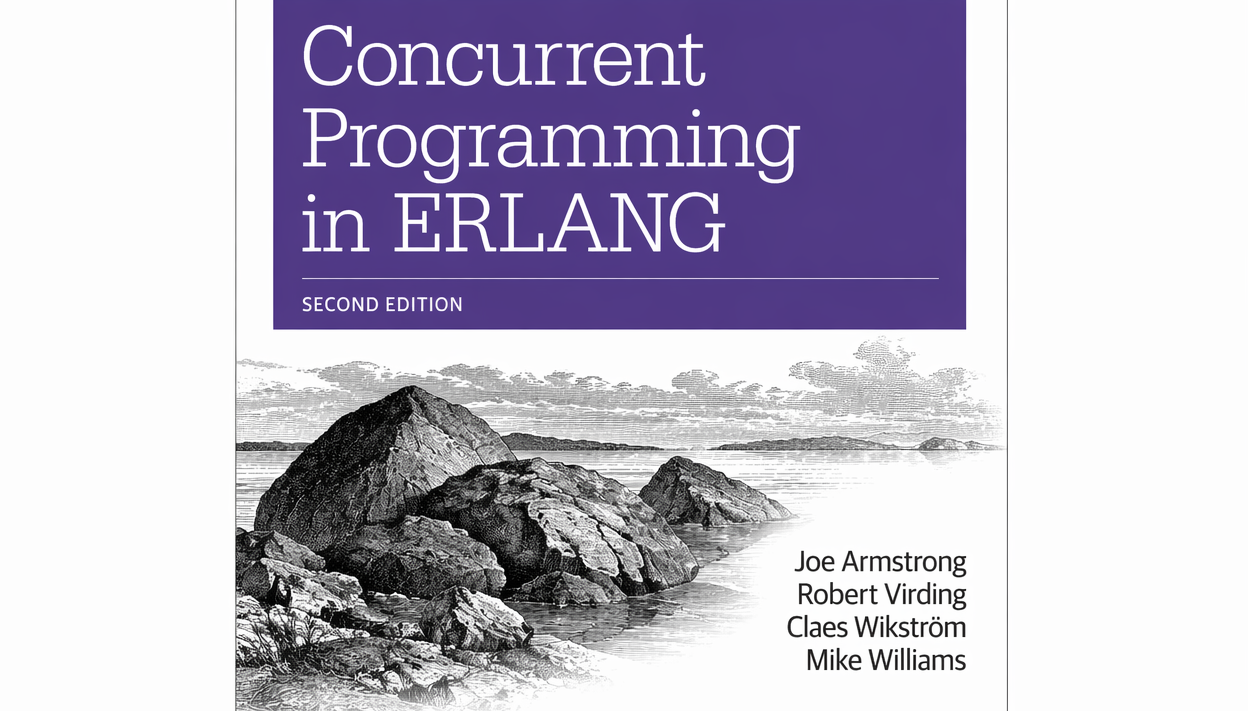
About the Book
This book serves as a comprehensive introduction to concurrent programming using the Erlang language, a language purpose-built for developing robust, fault-tolerant applications. It begins with a Erlang fundamentals, walking readers through sequential programming concepts before moving into the use of core data structures like lists and tuples.
At the heart of the text is concurrent and distributed programming — the defining feature of Erlang. The material details practical strategies for managing multiple processes effectively, covering how processes are created, how they communicate via message passing, and how systems can be structured to run across distributed nodes.
A strong emphasis is placed on error handling and best programming practices. Rather than treating errors as exceptions to avoid at all costs, the material underlines how robust applications should be designed so that developers can gracefully detect, isolate, and recover from problems as they arise — a philosophy central to Erlang’s design.
It also covers Erlang’s built-in functions and standard libraries, which extend the language’s core functionality and make it practical for real-world use. Throughout, the material is reinforced with example applications and discussion of common errors encountered when programming in Erlang, helping readers understand not just the theory but the practical pitfalls to watch for.
Who it’s for:
This resource is well suited for programmers looking to take advantage of Erlang’s distinctive strengths in concurrency — particularly those building systems that demand high availability, fault tolerance, and the ability to manage many simultaneous processes reliably.


 Total Users : 10043